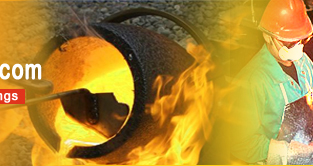
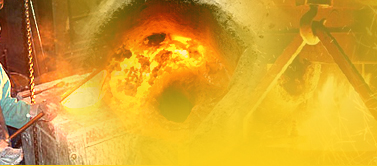
Introduction: A rotating furnace is an oil or gas run furnace which rotates on a horizontal axis. This method is used for manufacturing concave shape glasses for lens and primary
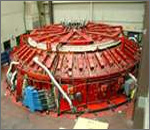
mirror for telescopes. This process is used for liquid mirror which is an affordable option as compared to solid mirrors. Rotating furnace is also known as rotary furnace, rotation furnace, rotating melting furnace and rotary melting furnace.
History: Newton observed that when centrifugal force is applied on a liquid, the liquid takes the shape of a parabaloid no matter in what container the liquid is place. The process was further developed in 1850 by Ernesto Capocci of the Naples Observatory. The first liquid mirror telescope was constructed by Henry Skey in 1872 .
Process: Rotary melting furnace is mainly used for manufacturing lens and mirrors using liquid metal like mercury or low melting alloys like gallium. The melt is placed in a furnace which rotates on a horizontal axis. The furnace is heated using oil or gas and spun on its axis. It was observed by Newton that the centrifugal force induced on a spinning liquid gives it the shape of paraboloid of revolution. In the same way the glass melted in the furnace rotates and acquires a natural concave shape. The spinning continues till the metal solidifies on cooling.
Paraboloid or revolution is the natural shape of a spun-up liquid like that of a lens, mirrors, antenna dishes, etc. Regardless of the shape of the container, the liquid acquire a parbaloid shape. Liquid mirror is a cheap alternative to solid mirror, since the rotation produces shape nearly accurate to the requirement. Therefore, little polishing and grounding is needed.
 Application:
 Rotating Furnace is a device used to created lenses and primary mirror for optical telescopes.
Advantages:
- Rotating melting furnace helps to mix the charge and utilize heat from the whole refractory surface.
- Low fuel cost is an advantage.
- The rotation produced precise shapes of lens, therefore little polishing and grinding is required as compared to solid lenses.
If you are looking to buy or for more information on rotating furnace, rotary furnace, rotating melting furnace, rotary melting furnace, then feel free to send your query any time.