The rich and varied application that the casting can be put to has made it an all time favourite. Casting is used to produce simple home made designs to complicated models of a the guns and aircrafts. One of the major concerns of a foundryman is to design and cast products that are reasonably priced. Following are the areas where metal casting is used:
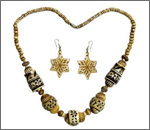
Jewelery Casting: One of the earliest forms of casting were of jeweleries in gold and silver. There is the mention in Kautailay Arthastras of gold mines in 500 B.C. From the ancient time lost wax process is the favourite method used for casting jewelery owing to the intricacy in design that can be done using this method.
 Motor Casting:
 The automobile depends on metal castings, from the engine to the brakes using ferrous, non ferrous metals and its alloys. Zinc die casting and aluminum die casting are some of the well known methods for casting automobile components. The primary concern of any foundry operation is manufacture light weight, perfectly designed products at the cheapest rates.
Air Craft Casting: Metal casting applications
are favoured by the air craft sector both in for miliatary and civilian purpose. The advanvantage is that casting helps to save thousands of dollars than what would have been spent on forging the aircraft components. Compositions of magnesium, titanium, aluminum, and other super alloys are used which gives high dimensional tolerance, and other mechanical properties.
Weapon Casting: One of the primary applications was for casting weapons for hunting and protection. The earliest proof of weapon casting is the casted copper axe head that was unearthed with the oldest naturally mummified of 3300 B.C. During World War II there was wide spread demand for casted weapon which lead to the development of a shell molding process that was patented as the croning shell process.
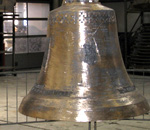
 Bell Casting:
 The rhythmicall thronging of the bells never loses its charms and so is the traditional methods of castig bells. Though the bell are not used on a large scale, there are many foundries that specialize in casting bells. Now a day sophisitcated lathe machines and hi-tech turning devices are used, but the traditional casting techniques are complied to.
Strand Casting: This is the process of casting the metal into a continuous strand which can be rolled in a convenient manner. These semi finishedshapes that are largely casted in the form of blooms, billets, plates, strips etc. helps in saving time, capital, and energy. This process saves labour and gives better yield of the product. Strand casting which is popularly known as continuous casting was commercial put into use only 50 years ago.
Apart from the above applications, metal casting also finds applications in many other areas, and the products made through metal casting are used for various industrial and domestic use.